Sleep Hygiene Practical Tips for Better Sleep Every Night
Health
|
May 25, 2026
Discover practical tips for improving sleep hygiene and achieving restful nights. Enhance your health and productivity with effective bedtime routines.
Sleep hygiene may sound like an overused term, but its significance in our lives cannot be overstated. It encompasses a set of habits and practices designed to promote consistent and restorative sleep—an elusive goal for many. Tossing and turning throughout the night or waking up feeling fatigued can significantly impact your overall health. Prioritizing sleep hygiene not only boosts your energy levels but also enhances mental clarity, mood stability, and even your immune system. Have you ever found yourself lying awake at 2 a.m., pondering the reasons behind a sleepless night? You’re certainly not alone. Understanding the importance of sleep hygiene can be the first step towards reclaiming those essential restorative hours and improving your well-being. When time is limited, deciding between an extra hour of sleep and an early workout isn't always straightforward. Our guide on extra sleep or an early workout walks through the key factors so you can make a choice that supports your health and long-term fitness goals.

Common Daily Habits and Environmental Factors That Disrupt Quality Sleep
Millions of individuals confront sleep-related challenges that turn nights into a struggle rather than a serene experience. These insufficient sleep episodes ripple throughout their daily lives, manifesting as fatigue, irritability, reduced productivity, and even interpersonal conflicts. Common practices like scrolling through social media on phones right before bed or binge-watching shows contribute significantly to sleep deprivation. The blue light emitted from these devices interferes with melatonin production, subtly undermining sleep quality long before individuals become aware of its negative impact.
By morning, the alarm clock often feels like a cruel reminder of yet another day of tiredness rather than the start of a refreshed day. Additionally, the bedroom environment may not be the sanctuary it should be; clutter, noise, and inappropriate temperatures can detract from sleep quality. Small distractions, like conversations from outside the bedroom or that glaring streetlight penetrating through the curtains, further complicate our efforts to fall into deep, restorative sleep essential for thriving. In our fast-paced society, emphasizing good sleep hygiene is crucial to overcoming these contemporary hurdles.
Why It Matters
Sleep hygiene is vital for sustaining health and overall well-being. Studies from the Centers for Disease Control and Prevention (CDC) indicate that one in three adults does not get sufficient sleep, leading to a host of serious consequences. Sleep deprivation is closely linked to cognitive impairments, such as decreased focus and decision-making difficulties. Research has shown that individuals sleeping less than seven hours each night are nearly three times more likely to experience mood disorders like anxiety and depression.
Prioritizing sleep hygiene can manifest numerous benefits, such as an uplifted mood and improved physical health. Adopting good sleep practices—like a consistent sleep schedule and crafting a peaceful environment—can greatly enhance one’s quality of life. Evidence suggests that quality sleep corresponds with a 30% boost in productivity and a 25% increase in attention span. Furthermore, insufficient sleep weakens the immune system, making one more vulnerable to illness.
By emphasizing sleep hygiene, individuals foster better mental and physical health, instilling healthier relationships and overall life satisfaction. It’s evident: investing in sleep leads to a richer quality of life. Healthy skin starts with good hygiene habits, but more frequent showers aren't always the answer.
Healthy Habits & Practical Tips
Establishing a bedtime routine plays a crucial role in enhancing sleep quality. If your sleep problems seem to coincide with hormonal changes, our guide on what actually helps menopause-related sleep problems explains why these disruptions happen and which evidence-based strategies are most effective. Here are actionable recommendations to help you formulate an effective nighttime regimen:
1. Maintain a Consistent Sleep Schedule
Strive to go to bed and rise at the same time every day, even on weekends. This consistency will aid in regulating your body’s internal clock, allowing you to fall asleep and wake up refreshed more effortlessly. Consider setting a nightly alarm to remind you it’s time to start unwinding.
2. Create a Comfortable Sleep Environment
Your bedroom ought to foster sleep. Aim to keep the space cool, dark, and quiet, as these conditions promote relaxation. Invest in quality bedding, a comfortable mattress, and blackout curtains to minimize disturbances. If external noise disrupts your peace, utilize a white noise machine or earplugs, and maintain tidiness to nurture a serene setting.
3. Limit Screen Time Before Bed
Exposure to blue light from screens disrupts melatonin production. Therefore, it’s advisable to turn off devices such as phones, tablets, and computers at least an hour before turning in for the night. Instead, engage in calming activities that mentally prepare you for sleep.
4. Incorporate Relaxation Techniques
Explore calming practices like meditation, deep breathing exercises, or gentle yoga to collectively ease your mind. Activities like reading or listening to soothing music can also aid in winding down. Opt for methods that enable you to relax and signal to your body that it’s time for rest.
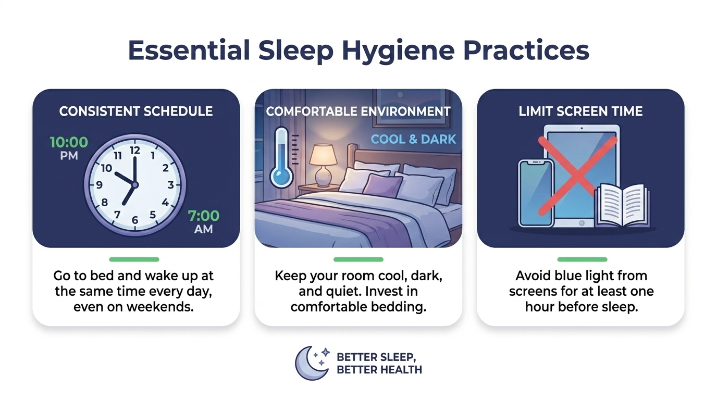
By integrating these suggestions into your nightly routine, you can pave the way for restful and rejuvenating sleep, ultimately enhancing your health and well-being.
Common Mistakes or Myths
One prevalent belief is that daytime napping is detrimental to nighttime rest. Yet this misconception is misleading. In actuality, short naps of around 20-30 minutes can promote alertness and elevate performance without significantly disrupting nighttime sleep. The trick is to steer clear of lengthy or late-afternoon naps that could interfere with your sleep cycle.
Another common myth claims that sleeping in total darkness is crucial for quality sleep. While darkness encourages melatonin production, some individuals may indeed benefit from a subtle nightlight, especially if they struggle with fear of darkness or feelings of insecurity.
The idea that watching TV before sleeping is harmless is also misleading; the blue light from screens can disrupt the body’s natural sleep-wake cycle. Poor sleep is only one possible explanation for persistent fatigue, particularly in women. Instead, investing time in relaxing activities such as reading or meditation makes for a far better pre-sleep practice. Understanding these specifics can lead to significant improvements in sleep hygiene.
Key Takeaway
Embracing effective sleep hygiene practices is critical for your overall wellness journey. Quality sleep directly influences your mood, productivity, and health, underscoring the necessity of prioritizing rest. Minor adjustments, such as establishing a consistent sleep schedule, cultivating a tranquil bedroom environment, and reducing screen time before bed, can substantially heighten sleep quality. By respecting your body’s requirement for restorative sleep, you empower yourself to conquer each day refreshed and invigorated. Begin today—incorporate small, practical adjustments to your nighttime routine and experience the remarkable benefits of better sleep. Your path to vibrant health commences with a restful night’s sleep!
Embrace the Journey Towards Better Sleep
Investing in sleep hygiene is a fundamental step towards enriching your overall well-being and quality of life. By applying the recommendations throughout this article, you can develop better sleep habits that lead to significant improvements in your daily routine. Remember that enhancing your sleep quality is a gradual process, where even slight adjustments can result in considerable enhancements in how you feel each day. So, adopt these practices, explore what resonates best with you, and seize control of your sleep habits today, unlocking the restful nights you rightfully deserve!
Was this helpful? Share your thoughts