Unlocking Your Financial Future: The Best Personal Finance Apps
Finance
|
April 21, 2026
Managing personal finances is becoming more challenging as everyday living costs continue to rise and income levels remain unpredictable for many individuals. From groceries and utilities to debt repayments and savings goals, it is increasingly important to have a clear understanding of where your money is going each month.
Managing personal finances is becoming more challenging as everyday living costs continue to rise and income levels remain unpredictable for many individuals. From groceries and utilities to debt repayments and savings goals, it is increasingly important to have a clear understanding of where your money is going each month.
Personal finance apps have become practical tools for addressing this issue. Instead of manually tracking expenses or relying on rough estimates, these apps help users monitor spending in real time, organize budgets, and gain clearer visibility into their overall financial situation.
In this article, we will review the best personal finance apps available today, comparing their features, strengths, and ideal use cases to help you choose the right tool for managing your money more effectively.

What Are Personal Finance Apps?
Personal finance apps are innovative digital solutions designed to help individuals manage their financial lives more efficiently. These applications provide a suite of functionalities that streamline budgeting, expense tracking, saving, and planning for the future. Essentially, they act as personal financial assistants conveniently accessible via smartphones or computers.
One of the primary functions of personal finance apps is budgeting. Users can establish particular financial goals, allocate funds across diverse spending categories, and keep tabs on their expenditures against these budgets. This framework simplifies the task of identifying spending patterns and allows adjustments that could lead to increased savings.
Tracking is another critical component. Personal finance apps enable users to record every transaction, whether small, like a morning coffee, or large, such as a monthly bill payment. By offering a detailed overview of spending behaviors, these apps help users recognize patterns and make informed financial decisions.
In addition, numerous personal finance apps feature tools designed for saving. Users can earmark funds for specific objectives, such as an emergency fund, a vacation, or purchasing a new gadget, often supported by savings strategies and tailored insights based on their unique spending habits.
Planning also plays a crucial role in financial management. Personal finance apps can assist users in forecasting future expenses by analyzing current spending and revenue streams, enabling them to make strategic financial choices that align with their personal goals.
Why Personal Finance Apps Are Becoming Essential
With inflation rates pushing living expenses to unprecedented levels, personal finance apps have emerged as critical assets for individuals wanting to take control of their financial situations. As day-to-day costs stretch budgets thinner than ever, the importance of diligent spending tracking and effective budgeting has never been more pronounced. These applications empower users to develop a comprehensive understanding of their financial well-being, enabling informed decisions that can lead to long-term goals such as home ownership, retirement savings, or building up an emergency fund.
Furthermore, the growing trend of distributing financial management through digital platforms reflects a broader shift towards technology-driven banking solutions. Although many reputable banks incorporate personal finance functionalities within their services, standalone applications like Mint, YNAB (You Need a Budget), and PocketGuard have gained traction due to their specialized capabilities. These apps not only facilitate budget management; they amalgamate insights into spending trends, offer alerts for upcoming bills, and even enable investment tracking, all packaged within one user-friendly interface.
As digital financial management continues to evolve, the significance of personal finance apps cannot be overstated. They act as indispensable allies for consumers navigating an increasingly intricate financial landscape. Armed with these tools, individuals can respond proactively to rising costs while effectively managing their finances, thus transforming aspirations into achievable realities.
Key Features to Look for in Personal Finance Apps
When seeking out the best personal finance apps to streamline your financial management in 2023, several essential features will enhance your user experience and make your budgeting more efficient. These critical elements include:
- Real-Time Expense Tracking
This standout feature allows users to monitor their spending as it occurs, providing immediate insight into their financial behaviors. By categorizing transactions in real-time, users can promptly understand their spending habits and make necessary adjustments, fostering mindful financial practices. - Budget Categorization
Effective budget categorization is vital in personal finance apps. Users can allocate budgets for specific categories like groceries, dining, and entertainment, which aids in staying within their financial limits. This practice not only guides budget adherence but also encourages users to be aware of potential overspending, steering them toward healthier spending behaviors. - Financial Goal Setting
Many personal finance apps provide the ability to set aspirational financial goals, allowing users to visualize achievements like saving for vacations, paying off debts, or building an emergency fund. Visual progress indicators can motivate continued efforts towards these objectives. - Security & Encryption
Given that personal finance apps manage sensitive information, security must be a top priority. Look for apps that offer features such as two-factor authentication, end-to-end encryption, and biometric logins to protect against data breaches. - Multi-Device Synchronization
In our rapidly-paced world, it is crucial to access personal finance data from various devices. The best apps synchronize seamlessly across smartphones, tablets, and desktop systems, allowing users to keep tabs on their finances wherever they may be. With device compatibility, users can stay informed without interruptions.
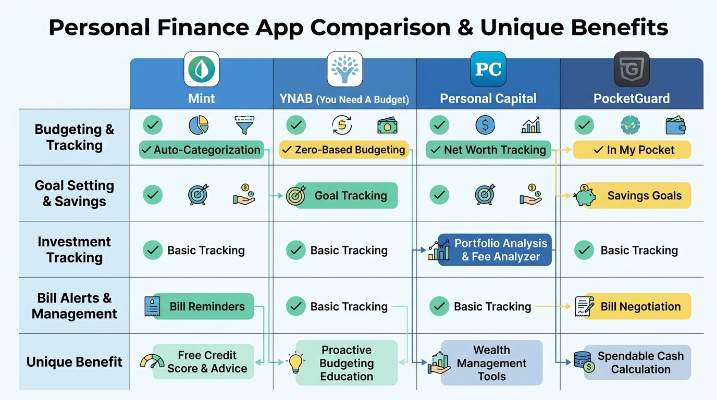
Selecting a personal finance app with these pivotal features can revolutionize your financial management. By focusing on real-time tracking, intuitive categorization, goal setting, robust security, and multi-device accessibility, users equip themselves with tools to unlock a successful financial future.
Real-Life Use Cases of Personal Finance Apps
As technology advances, personal finance apps have become essential for diverse demographics. Here, we explore various ways these apps serve distinct audiences, illustrating their versatility in meeting different financial needs.
Students Managing Budgets
For students navigating tuition, living costs, and social outings, personal finance apps like Mint and YNAB can be transformative. Consider Sarah, a college sophomore needing to maintain a limited budget. By categorizing her expenditures and receiving alerts for overspending in sectors like dining and entertainment, she maximizes her resources. This practice not only helps her avoid debt but also imparts valuable budgeting skills beneficial for her future.
Freelancers Tracking Irregular Incomes
Freelancers often contend with fluctuating income, making budgeting a complex endeavor. Personal finance apps such as QuickBooks Self-Employed provide the tools necessary for organization. Take James, a graphic designer—he meticulously tracks his earnings and expenses, allowing him to oversee cash flow and prepare for lean periods. Furthermore, the app enables him to effortlessly separate personal and business expenditures, streamlining his financial responsibilities during tax season.
Families Promoting Teamwork Through Shared Budgeting
For families, financial decisions often involve cooperation and transparency. Apps like Honeydue facilitate the collective management of household expenses. The Ramirez family, for instance, leverages Honeydue to coordinate their monthly budgets and track costs, allowing each member to contribute. This shared accountability fosters unity and enhances understanding of their financial status while working collectively towards saving goals, such as a family vacation.
Professionals Optimizing Expenses for Savings
Professionals seeking financial independence can employ personal finance apps, such as Personal Capital, to optimize their financial strategies. Emily, a marketing manager, utilizes this app to monitor her investments and evaluate her spending habits. Through in-depth analysis of her financial data, she identifies areas ripe for cuts, such as redundant subscriptions, aiding her journey to build a reliable savings buffer for her dream home.
Pros and Limitations of Personal Finance Apps
Personal finance apps have gained popularity as individuals look for more effective ways to manage their money. While these applications boast various advantages, a set of limitations exists that users should consider before fully committing.
Pros of Personal Finance Apps
One of the most prominent benefits of personal finance apps is the ease of expense tracking. Users can input transactions swiftly, helping them better understand their spending habits and avoid overwhelming financial burdens.
Furthermore, personal finance apps encourage increased financial awareness. By organizing expenditures and displaying financial trends, users can grasp where their money is allocated, fostering more informed spending decisions and overall financial health.
Many personal finance apps also provide automated budgeting functions, allowing users to effortlessly create and modify budgets. Sending alerts when users approach their spending thresholds mitigates overspending, thereby helping individuals adhere to their financial objectives.
Limitations of Personal Finance Apps
Nevertheless, some limitations require careful consideration. Privacy concerns often arise with personal finance applications, as users must share sensitive data. Security breaches can be a significant worry; users should opt for apps that emphasize encryption and data safety.
Moreover, users may encounter subscription fees associated with many personal finance apps. Although some are free, others require monthly or annual payments for premium features, which may deter cost-conscious users.
In summary, while personal finance apps provide numerous advantages such as easy expense tracking, enhanced financial consciousness, and budgeting automation, it is vital to remain aware of the drawbacks, like privacy worries, subscription costs, and learning difficulties. Evaluating both aspects enables users to make more informed choices regarding personal finance apps that meet their needs.
Embracing Financial Empowerment
In summary, personal finance apps stand as invaluable resources for individuals dedicated to improving their financial literacy and management capabilities. These applications streamline budgeting, efficiently track expenses, and facilitate goal setting, making financial oversight more accessible than ever before. By capitalizing on the insights provided by these personal finance apps, users can foster a better understanding and command over their economic situations. However, it is crucial to recognize the importance of selecting the most suitable app tailored to one’s distinct circumstances, as not every financial solution fits all. Putting in the effort to research and compare the range of options available is key to finding the best match for each person's financial profile. Ultimately, the right personal finance app can empower users to make informed choices, unlocking the pathway toward secure financial futures and improved economic well-being.
Was this helpful? Share your thoughts