Benefits of Power Naps How Short Naps Boost Energy and Focus
Health
|
May 22, 2026
Discover how power naps can rejuvenate your energy, enhance productivity, and improve mood in just 10-30 minutes. Embrace this simple self-care strategy for optimal well-being!
People prioritize constant productivity and frequently neglect self-care—and short power naps have emerged as a highly effective way to recharge the mind. A power nap refers to a short rest session ranging from 10 to 30 minutes, bringing a wide array of perks: sharper focus, brighter moods and boosted work efficiency.
Today’s people juggle countless obligations, including pressing work deadlines and childcare responsibilities, creating an urgent need for reliable ways to restore energy. Latest studies confirm these brief rest breaks go far beyond easing fleeting fatigue; they sharpen overall cognitive ability, helping you stay efficient amid packed daily schedules.
More people are starting to integrate power naps into their daily schedules after learning their full range of benefits. A properly timed short rest serves as a hidden solution to counteract the mounting stress of modern living. Give power naps a try, and see how these quick pauses help you perform at your absolute best.
Navigating the Everyday Hustle
The contemporary landscape often presents overwhelming challenges, especially for those managing demanding work schedules while raising children. For example, imagine a single parent striving to balance the responsibilities of a full-time job, school runs, and preparing dinner. As fatigue creeps in, their mind can swirl with a never-ending checklist, leaving scant room for self-care. In a similar vein, professionals entrenched in high-pressure environments may find themselves glued to screens during late nights, only to awaken early the next morning feeling drained and irritable. In these instances, the desperate need for a revitalizing boost becomes starkly clear.
Globally, the cultural acceptance of naps highlights their role as antidotes for fatigue. In Spain, for example, the tradition of the siesta provides individuals a chance to retreat from the heat and recharge their energy for the evening ahead. Meanwhile, Japan's concept of “inemuri” not only serves as a means of refreshing oneself but also reflects a culture that honors hard work. The various practices around the globe emphasize a universal understanding: quick naps transcend mere luxury, acting as essential respites that bolster resilience against life's many stresses. By acknowledging the pressures propelling us toward these moments of repose, we reaffirm the significance of napping in enhancing our well-being.
The Importance of Rest for Optimal Health
Sleep and restorative rest are critical foundations for sustaining overall health and wellness, playing significant roles in everything from energy levels to mood and productivity. The CDC notes that insufficient sleep is associated with a higher risk of chronic conditions including obesity, type 2 diabetes, heart disease, and stroke. Beyond physical health, numerous studies have found that adequate sleep supports attention, decision-making, and workplace performance. Sleep scientist Matthew Walker has also argued that sleep is one of the most powerful legal performance enhancers available, highlighting its broad impact on both physical and cognitive function.
Moreover, numerous studies reveal that short naps can augment cognitive functions, including memory retention and creativity. Research published in the journal Neurobiology of Learning and Memory and related sleep research have found that short daytime naps can improve memory consolidation and certain aspects of cognitive performance. Sleep researcher Sara Mednick has also noted that brief naps—typically around 20 to 30 minutes—can enhance alertness, attention, and executive function without causing significant sleep inertia. Understanding these benefits is paramount—not only for boosting personal productivity and mood but also for fostering a culture that prioritizes wellness and encourages healthier lifestyles in a fast-paced world that often relegates rest to the side.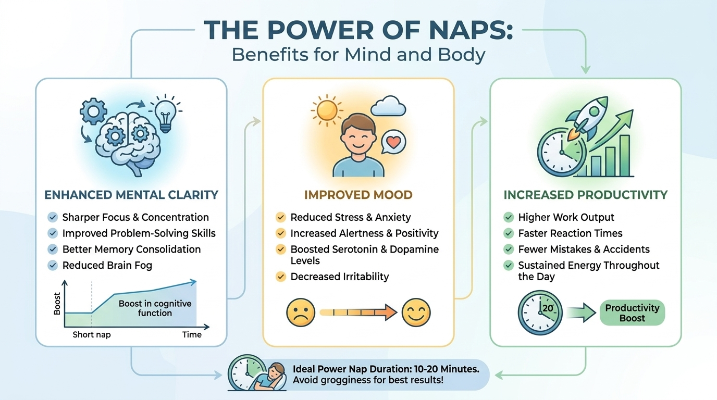
Effective Strategies for Incorporating Power Naps
Integrating power naps into your daily routine can be a game-changer in terms of energy levels and productivity. Here’s a concise guide to optimizing your napping experience:
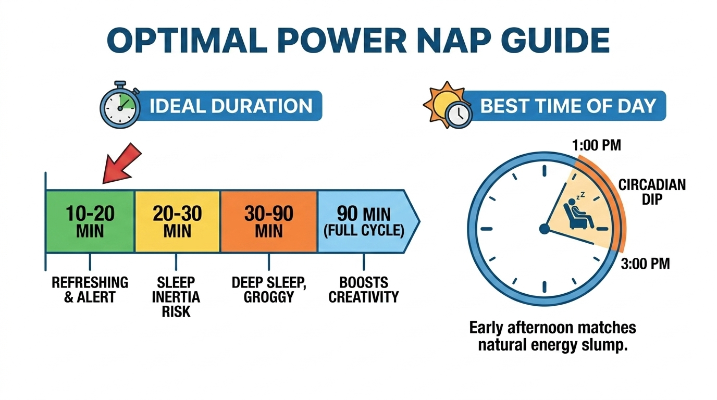
1. Determine the Appropriate Duration:
- Strive for a nap length of 10 to 30 minutes. This window is ample for a refreshing boost while being short enough to prevent grogginess.
2. Identify the Ideal Napping Time:
- Typically, the post-lunch slump (around 1-3 PM) makes for an excellent napping opportunity, aligning with natural energy dips. Consider these optimal periods:
- Shortly after your lunch break to recharge for the latter part of your day.
- Mid-morning if you woke up early or are already feeling fatigued before noon.
3. Create a Restful Environment:
- Select a Suitable Location: Seek a tranquil and comfortable spot, whether it be your office chair, the living room couch, or even your bed.
- Utilize a Timer: Set your phone or a timer to wake you up after 20 minutes, ensuring you avoid oversleeping.
- Focus on Comfort: Use an eye mask to block distractions and create a comfortable setting with cozy clothing or blankets.
4. Seamlessly Integrate Power Naps into Your Life:
- Schedule naps in your calendar much like any other important appointment.
- Develop a consistent routine; doing this regularly will reinforce the habit.
- Communicate with coworkers if needed, so they are aware you’ll be temporarily unavailable.
By adhering to these tips, you can elevate power naps into a productive part of your everyday routine, greatly benefiting your overall well-being and efficacy.
Debunking Common Napping Myths
Despite their numerous advantages, many people continue to associate napping with laziness or perceive it as a detrimental use of time. This pervasive misconception overlooks the significant benefits associated with short naps. In reality, power naps lasting between 10 to 30 minutes are proven to enhance alertness and performance. It is crucial to distinguish these beneficial naps from prolonged periods of sleep, which may disrupt nighttime rest patterns, leaving individuals feeling groggy. In contrast to hindering productivity, power naps actually serve to enhance it, revitalizing mental and physical energy.
Embracing healthy napping habits can lead to better focus and overall well-being. The key takeaway is to view napping as an essential act of self-care, fully recognizing its role in maintaining optimal productivity amidst our busy schedules. Hence, it is time to discard the myths surrounding napping and embrace restorative naps as vital components of a healthy lifestyle.
Embracing the Power of Brief Respite
Power naps enrich our lives with numerous benefits, including heightened alertness, improved mood, and enhanced productivity. Research indicates that indulging in a short snooze of 10 to 30 minutes can effectively combat fatigue and uplift cognitive performance without succumbing to the drawbacks associated with longer naps. To smoothly incorporate power naps into your daily rhythm, consider setting aside time during your lunch break or during the common afternoon energy slump—wherever you can find a few moments of restorative rest. Transforming your well-being doesn’t necessitate grand changes; small adjustments like integrating power naps can result in marked improvements in your overall health. Embrace this practice to revitalize your energy and elevate your mental acuity, empowering yourself to confront life’s demands with vigor. Remember, nurturing your health through manageable lifestyle adaptations can ignite sustained vitality and improved productivity, making you feel more capable and rejuvenated than ever before!
Was this helpful? Share your thoughts