Dental Insurance Medicare Advantage Plans: What You Need to Know
Insurance
|
April 21, 2026
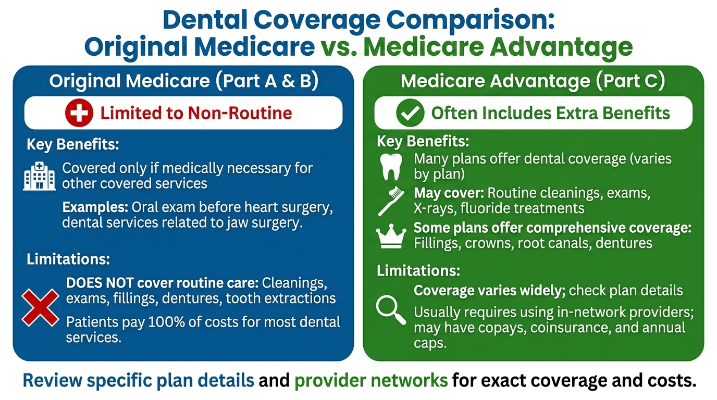
Medicare Advantage (Part C) plans often include dental coverage, while Original Medicare does not cover routine dental care such as cleanings, fillings, or dentures. Depending on the plan, benefits may range from preventive services to more extensive treatments like crowns or root canals. However, coverage varies widely by provider, so it’s important to compare plans carefully before enrolling.
Medicare Advantage (Part C) plans often include dental coverage, while Original Medicare does not cover routine dental care such as cleanings, fillings, or dentures. Depending on the plan, benefits may range from preventive services to more extensive treatments like crowns or root canals. However, coverage varies widely by provider, so it’s important to compare plans carefully before enrolling.
What Are Dental Insurance Medicare Advantage Plans?
Medicare Advantage serves as a viable alternative to Original Medicare, combining the services of Medicare Part A (hospital insurance) and Part B (medical insurance) into a single plan often provided by private insurance firms. A significant advantage of many Medicare Advantage plans is their inclusion of dental benefits, which can greatly alleviate the out-of-pocket expenses associated with dental care. However, it’s essential for beneficiaries to understand that coverage can differ widely among plans. Some Medicare Advantage options might offer comprehensive dental services, while others provide only limited coverage or have specific exclusions. Prospective enrollees should closely review individual plans to better grasp the dental services included, any costs involved, and the possible limitations that may apply.
Does Medicare Cover Dental Insurance?
Original Medicare typically does not provide coverage for routine dental services such as cleanings, fillings, or extractions. However, there are exceptions: if a dental service is deemed medically necessary and connects to other specific treatments—such as procedures required as part of a hospital stay—coverage may be available, although these situations are not common.
Because of these restrictions, beneficiaries frequently seek broader dental coverage through Medicare Advantage plans or opt for separate dental insurance policies. These options generally extend more comprehensive benefits, addressing the routine dental healthcare needs of seniors. Thus, understanding the distinctions between these alternatives is vital for informed decision-making regarding one's dental health in conjunction with Medicare coverage.
What Dental Benefits Are Included in Medicare Advantage Plans?
Preventive Dental Care
Medicare Advantage plans usually encompass a variety of preventive dental services. Commonly covered services include regular check-ups, teeth cleanings, and X-rays, all crucial for upholding oral health. Consistent preventive care not only addresses current concerns but also helps identify emerging issues, reducing the likelihood of requiring substantial and expensive dental work in the future.
Basic Dental Services
Moreover, many Medicare Advantage plans include basic dental services. This category often consists of treatments such as cavity fillings, tooth extractions, and management of gum disease. These essential services target prevalent dental conditions that may develop as individuals age, ensuring beneficiaries maintain robust oral function and overall health.
Major Dental Services
Major dental services may also be covered, albeit partially, under various Medicare Advantage plans. These more advanced procedures can include root canals, dentures, and crowns. However, coverage details can vary significantly, making it crucial for beneficiaries to examine their specific plans to ascertain what treatments are included.
Limitations and Annual Maximums
Coverage for dental services within Medicare Advantage plans can differ widely, typically dictated by the individual plan itself. For some plans, comprehensive coverage might be available up to an annual limit of $1,500, while others may impose much lower caps or exclusions on specific services. Thus, it is imperative for beneficiaries to scrutinize their plans closely and understand any potential out-of-pocket costs that may arise due to these limitations. In addition, some services might incur co-pays or be subject to waiting periods, complicating the selection of an appropriate plan further.

What Is Typically NOT Covered?
When evaluating dental benefits under Medicare Advantage plans, awareness of common exclusions is vital. Generally, Medicare does not cover any aspects of cosmetic dentistry—procedures solely aimed at aesthetic improvements, such as teeth whitening or veneers, are excluded. Moreover, certain implants may fall outside coverage, particularly when not classified as medically necessary.
Significant restorative treatments, including complete mouth restoration or advanced crowns, are frequently not covered, with substantial variations depending on the plan specifications. Beneficiaries should also be mindful that some procedures will entail waiting periods prior to being eligible for coverage, indicating that benefits for specific treatments might not be accessible right away. Familiarizing oneself with these exclusions aids beneficiaries in making more educated decisions regarding dental health needs within Medicare Advantage plans.
How to Choose the Best Dental Insurance Medicare Advantage Plans
Selecting the optimal dental insurance within Medicare Advantage plans can be daunting. However, with some pivotal steps, the decision-making process can become more manageable.
- Check Plan Summary of Benefits: Begin by examining the plan summary, which delineates the dental benefits included. Pay close attention to covered services, including preventive and basic care, along with any potential exclusions.
- Compare Annual Maximums: Each plan has yearly maximum payouts for dental services. It’s essential to compare these maximums across various plans to identify options with higher limits that could reduce costs for expensive procedures.
Through these steps, seniors can confidently select a Medicare Advantage plan that aligns with their dental insurance needs.
Common Mistakes When Choosing Medicare Dental Coverage
Seniors often encounter several common pitfalls when navigating Medicare dental coverage. Firstly, many mistakenly assume that all Medicare Advantage plans universally include dental benefits. This assumption can lead to unexpected gaps in coverage since offerings differ significantly across plans.
Ignoring annual coverage limits is another frequent misstep, leaving beneficiaries liable for out-of-pocket expenses once maximum coverage levels are exceeded for the fiscal year. Additionally, neglecting to check network providers can result in complications, as opting for out-of-network dentists may incur higher expenses or disqualify care altogether.
Overlooking waiting periods for certain dental services creates unplanned delays for seniors, especially for major dental acts that necessitate extended coverage. Finally, misunderstanding the implications of various coverage levels can lead to confusion regarding costs and benefits. Therefore, it is crucial for beneficiaries to diligently review their options. By sidestepping these mistakes, seniors can make better-informed choices regarding their dental health needs.
Insights on Dental Insurance Medicare Advantage Plans
In summary, dental benefits associated with Medicare Advantage plans can display considerable variability, with some plans offering extensive coverage while others afford minimal assistance. Many seniors rely on these plans as their primary source of dental insurance, underscoring the importance of understanding the nuances of each available option.
Before reaching a conclusion, beneficiaries should thoroughly compare several plans and validate their coverage details by reviewing official plan materials. By taking these crucial steps, seniors can ensure that they choose dental benefits that effectively cater to their individual health needs.
Was this helpful? Share your thoughts